
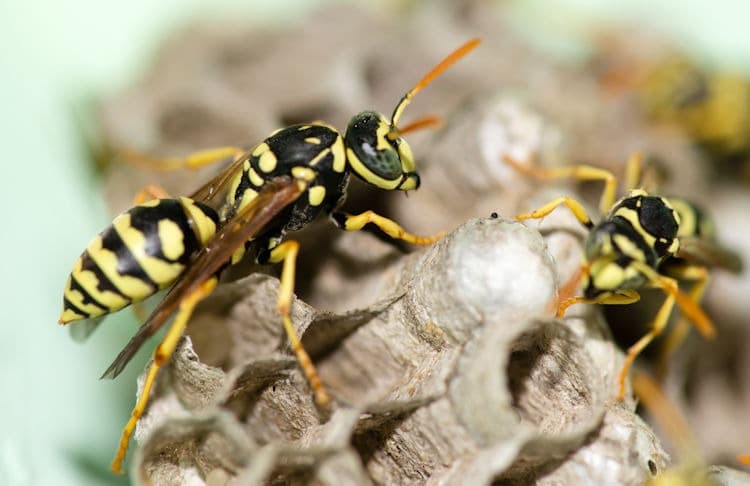
Bee & Wasp Nest Removal in Southern Maryland & Northern Virginia
Found a nest? Don't spray it yourself. We'll find it and deal with it.
Free & no obligation · By appointment · Southern MD & Northern VA
Why it keeps happening
Maybe you spotted a nest under the eave, on the deck rail or in a shrub. Maybe you keep getting stung near a spot you can't quite find. Either way, you don't want to be the one holding the spray can. We treat and remove wasp, hornet and yellow jacket nests, and we deal with carpenter bees that are boring into your wood. If you're looking for bee or wasp removal near you, start with a free inspection and we'll tell you what you have and what we'd do about it.
The real question
Who do I call about a wasp nest near me?
Contact us, or book a free inspection. A technician finds the nest, works out what built it, and treats or removes it. Many nests can be handled in a single visit, depending on where the nest is and how easy it is to reach.
Not sure what you’re seeing? An inspection tells you exactly what’s going on.
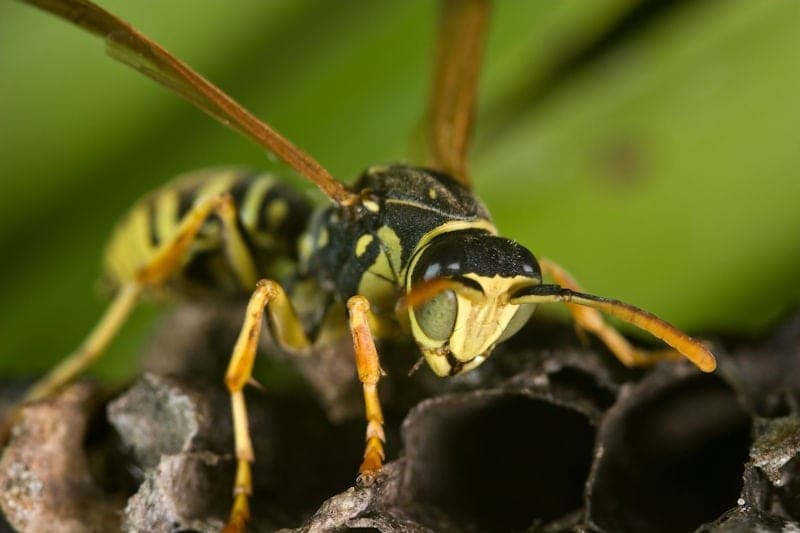
If you've just found a nest
If anyone is having trouble breathing, has swelling in the face or throat, feels dizzy, or has been stung many times, call 911. Don't wait for a pest company.
If it isn't an emergency, the main thing is to leave the nest alone. Most stings happen when someone tries to handle it.
- Keep children and pets away from the area.
- Don't spray the nest, knock it down or block the entrance.
- Don't try it at night. Poor visibility adds to the risk.
- Note where the nest is, from a distance, so you can tell us.
Then contact us and describe what you're seeing.
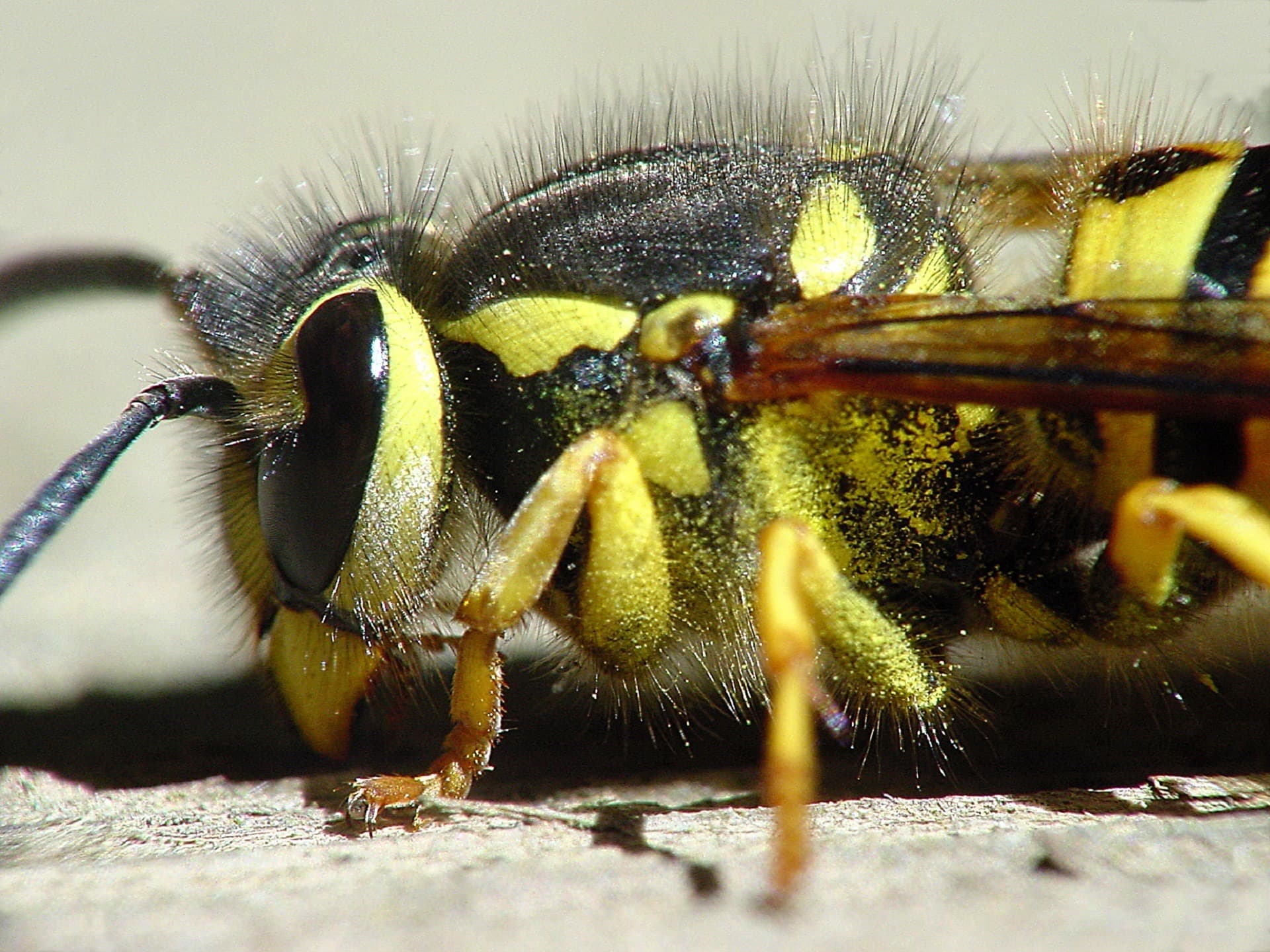
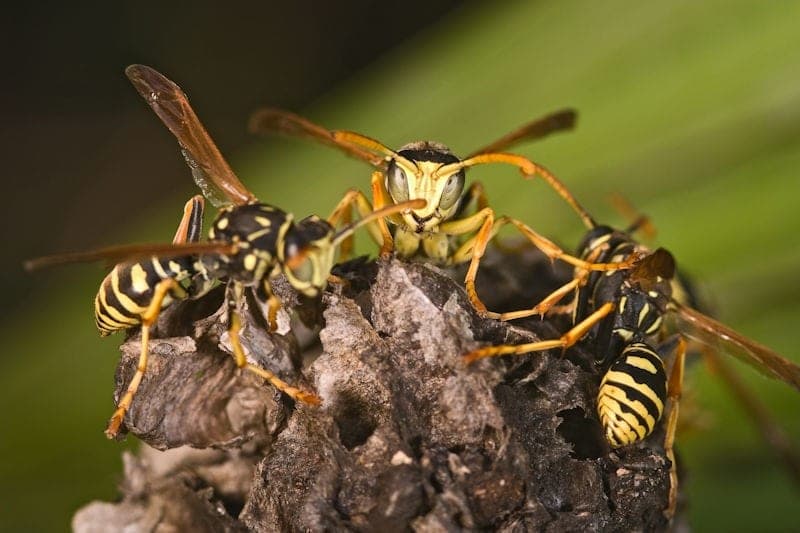
What built the nest?
Where the nest is, and what it looks like, tells you a lot. Here's what we usually see around here:
- An enclosed grey paper nest in a tree, shrub or under a roofline: usually hornets
- An open, umbrella-shaped nest under an eave, railing or deck: usually paper wasps
- A hole in the ground with insects flying in and out: often yellow jackets
- Buzzing at a seam in the siding, a soffit or a wall: a nest inside the wall
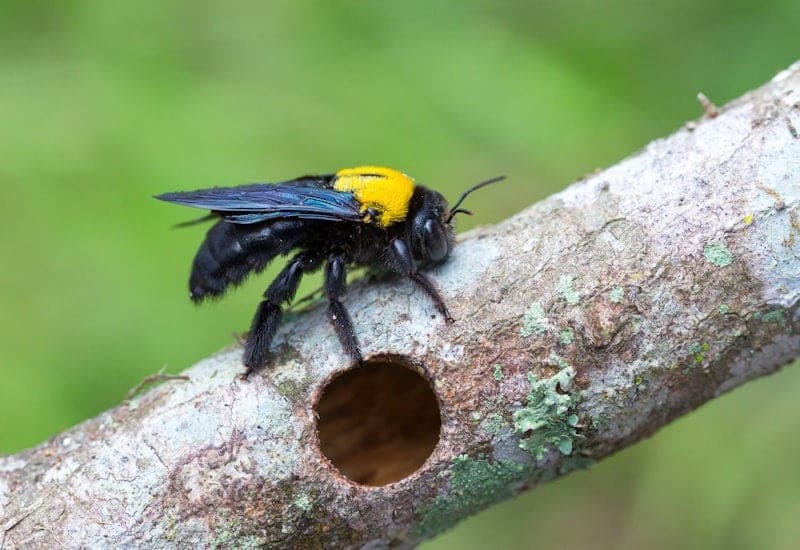
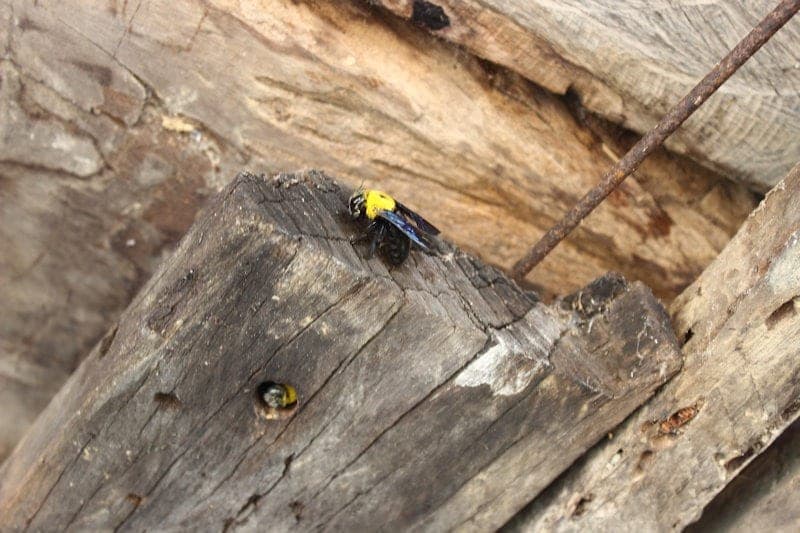
- Round holes about half an inch wide in wood, with fresh sawdust below: carpenter bees
Not sure? That's normal. These are hard to tell apart from a distance, and getting closer isn't worth it. Our answer on telling wasps from hornets helps, and an inspection settles it.
How we handle each kind
The right method depends on the insect and on where the nest is.
- Wasps, hornets and yellow jackets: we find the nest, identify what built it, and treat or remove it based on where it is and how easy it is to reach.
- Carpenter bees: we look for the entrance holes and fresh sawdust, treat the activity, and talk through how to protect the wood afterward.
- Nests in walls and other tight spots: we find where they get in, and we tell you what we found before we start.
Depending on the job, we may come back to confirm the nest is gone. Our guide on how exterminators get rid of carpenter bees walks through that process in more detail.
A note on honey bees
Honey bees are a different case. They pollinate, and in many situations a local beekeeper is the better call. If you're not sure whether you have honey bees, wasps or something else, contact us before anyone treats it. We'll help you work out which it is.
Why not do it yourself?
Spray often doesn't reach the whole nest, and it can send the colony after whoever is holding the can. Knocking a nest down is worse. The insects that were out foraging come back to nothing and tend to rebuild close by.
A nest in a wall or in the ground makes it harder still. You can't see how big it is, and you can't see where the insects are coming from.
More on this: spraying a nest yourself, knocking one down, removing one at night.
Keeping nests from coming back
Nothing stops insects from nesting nearby for good, but you can make your home less appealing.
- Seal gaps in siding, soffits and around utility lines.
- Keep trash cans closed and don't leave food or drinks out on the deck. Yellow jackets go for them.
- Paint or stain bare wood. Carpenter bees prefer unfinished wood.
- Look over the eaves, sheds and decks in spring, when nests are still small.
Our guides cover keeping yellow jackets away, reducing conditions that attract carpenter bees and preventing wasps from nesting again.
Where we work
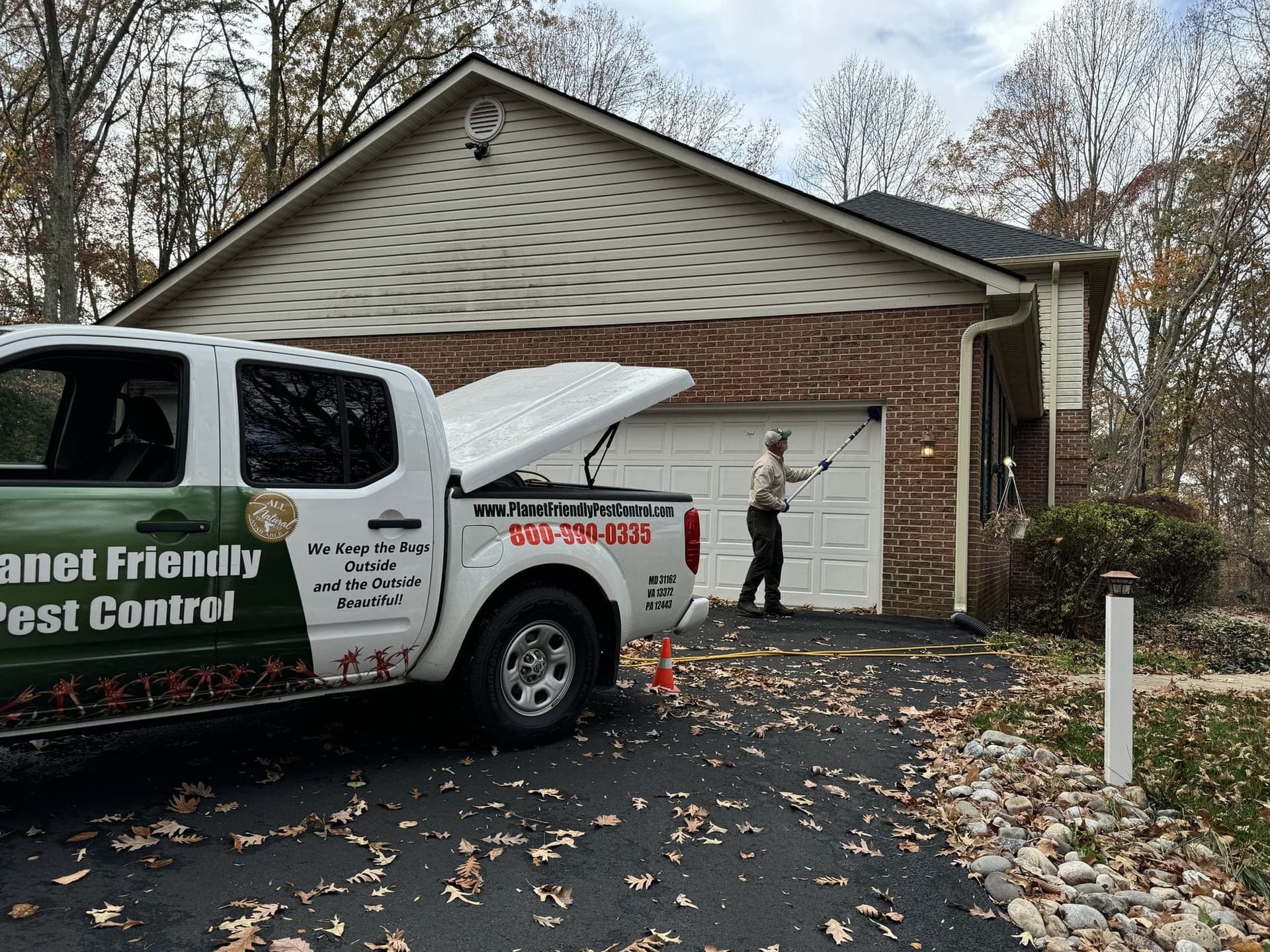
We treat nests in homes across Southern Maryland and Northern Virginia. For the full service, see our stinging insect control page.
Reviews
Hear From Our Happy Customers
Hundreds of Google reviews across our verified service locations.
Excellent on Google
Josh F.
Google review · Sep 2026
Alex was great! Very professional and explained the whole process before doing any work. We had a wasp nest in our wall, getting in through a seam between our brick and siding. I thought it would be a costly problem, but it was taken care of in about 15 minutes.
Amy B.
Google review · Sep 2026
I am very pleased with the work of Planet Friendly Pest Control. I had a large wasp nest in the garage and they came out to treat it the same day! The process was clear and professional. I was told the price when I called and they didn't try to upsell me on a monthly or quarterly contract. As mentioned above, they came out the same day I called and they texted me when they were on their way. They treated the nest and then came back a week later to confirm it was taken care of and removed the nest. It's now been a couple of weeks since the initial visit and no sign of new wasps! I would not hesitate to use them again.
Cheryl P.
Google review · Aug 2026
Tech was very nice, explained what the chemical is designed to do.
Patrick H.
Google review · Jul 2026
I want to sincerely thank Planet Friendly Pest Control and its owner, Gene Wright, for their immediate response and action to deal with a hive of Bald Face Hornets who, unbeknownst to me, had taken home in a fair size shrub at the back of my house. As I attempted to trim the shrub, I was swarmed by Hornets and stung 8 or 9 times before I could get to safety. I left my tractor and tools in a hurry and was afraid to retrieve them until the bee issue was addressed. Again, PFPC responded quickly and allowed me to get my tools and continue my recovery from the bee stings. I considered the price to be very fair for the treatment of the issue at hand and the sharing of knowledge to avoid further such mishaps. I will only call PFPC when in need of pest control.
Betty E.
Google review · Jul 2026
Roger came out and killed hornets in large nest on our house. It was taken care of the day after I called for service.
Ken C.
Google review · Jun 2026
Planet Friendly has been doing our pest control for several years now. They are reliable, and perform a great service for us. We are notified by email when the appointment is confirmed. They are always professional and knowledgeable.
Nikole R.
Google review · Jun 2026
Really appreciate Roger coming out to the house to not only treat for common insects that like to make their way into the house (regularly scheduled maintenance), but also exterminate a hornet nest we found on our deck this last week. Great service, arrives on schedule (and sends a text with arrival time when he’s on his way), and most importantly - no critters coming inside my house - or hornets potentially stinging us. Recommend Planet Friendly Pest Control to anyone looking for an exterminator.
Kathleen M.
Google review · Jun 2026
Great service. No bugs in the house! They quietly and quickly get the job done, no hastle.
San D.
Google review · Jun 2026
Roger was very kind and professional. He did an excellent job attending to areas of the exterior of our home that required extra attention.
Patti W.
Google review · Jun 2026
Gene Wright came highly recommended by multiple neighbors. He came out the same day I called and showed great knowledge about our mouse problem! Gene was responsible, knowledgeable and a delight to deal with. We highly recommend Planet Friendly Pest Control.
Denise A.
Google review · Apr 2026
This is my third year using Planet Friendly to control ants in my home. I have yet to see an ant. What a relief. This is a real necessity where I live. Thank you.


Frequently Asked Questions About Bee & Wasp Nest Removal
Wasps and hornets are slimmer, with a narrow waist and a smooth, shiny body. Bees are rounder and fuzzier. Carpenter bees are large with a shiny black abdomen, and you'll usually see them hovering around wood. If you can't tell from a distance, don't go closer. We can identify it at the inspection.
We treat carpenter bees, and we remove wasp, hornet and yellow jacket nests. Honey bees are usually a job for a beekeeper. If you think you have honey bees, contact us first and we'll help you figure out what you're dealing with.
We'd say no. Disturbing a nest without protection can trigger an attack, and partial treatment often leaves the colony alive and angrier. See is it safe to spray a wasp nest yourself?
If anyone is having a medical emergency from stings, call 911 first. If a nest needs attention soon, contact us, tell us where it is and we'll give you a straight answer on timing. We won't promise a time we can't keep.
The nest we treat won't. Insects can start a new one nearby if the conditions are still right, like food, shelter and gaps to get into. That's why we look around the property and not only at the nest.
Activity picks up from late spring through early fall, and insects are most aggressive in mid to late summer. Nests are smaller and easier to deal with early in the season.
Yes. The initial inspection is free, and there's no obligation.
Trusted locally
Local Nest Removal Experience You Can Trust
Gene Wright began solving pest problems in 1998. He founded Planet Friendly Pest Control in 2010 to provide a more thoughtful, inspection-driven approach for homeowners.
Planet Friendly Pest Control serves Southern Maryland and Northern Virginia with inspection-first, exterior-first pest control for homes with pets.
- Licensed in MarylandLicense #31162
- Licensed in VirginiaLicense #13372
- A+ BBB ratingNot BBB accredited
- MSPCA memberMaryland State Pest Control Association
- NPMA memberNational Pest Management Association
Questions About Nests
Stay back, keep people and pets away, and don't disturb it. The full answer covers what to do next.
Read the full article: What should I do if I see an active nest right now?Often, but not always. The full answer explains what to look for.
Read the full article: Does seeing one wasp mean there's a nest nearby?Yes. The full answer explains the signs of a nest in a wall.
Read the full article: Can stinging insects nest inside walls?They're often hidden, in the ground or inside a structure. The full answer explains what to look for.
Read the full article: What do yellow jacket nests look like?Read the full answer before you take one down yourself.
Read the full article: Should old nests be removed?Carpenter Bees, Yellow Jackets and Paper Wasps
Round holes in wood with sawdust below are the usual sign. The article explains when it's time to call.
Read the full article: When should I call a professional about carpenter bees?They rarely sting, but their tunnels can weaken wood over time. The article explains the damage and what to do.
Read the full article: Are carpenter bees destructive?High activity, a visible nest or repeated stings are the signs. The article covers when to bring in a professional.
Read the full article: When should I call for help with yellow jackets?Paper wasps build the open, umbrella-shaped nests you often see under eaves. Our article explains how to recognize them.
Read the full article: What is a paper wasp?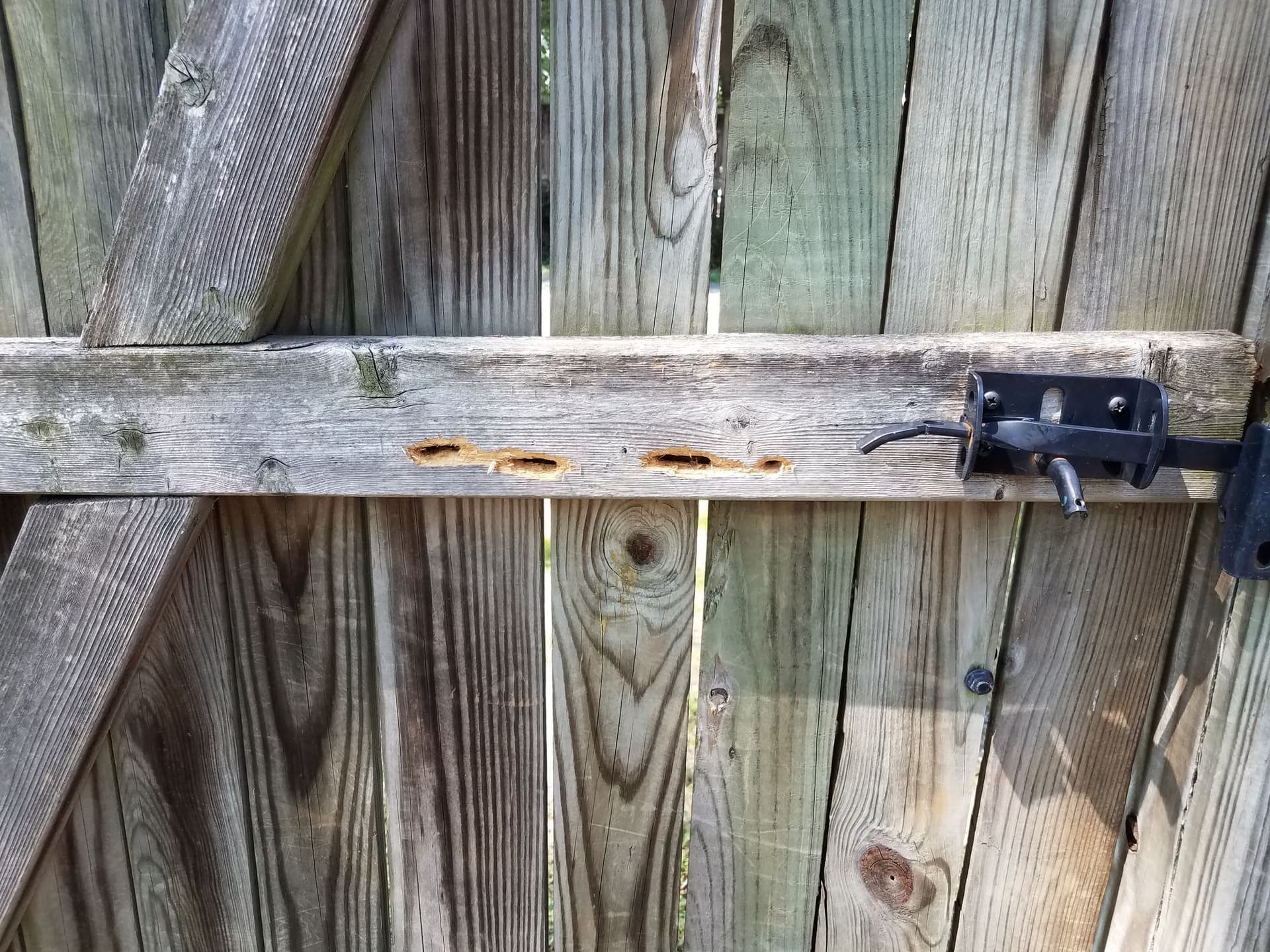
Free & no obligation
Got a nest you want gone?
Contact us and tell us what you're seeing. We'll find it, identify it and tell you what we'd do. The initial inspection is free, with no obligation.
If a covered pest returns while the customer's service is active, Planet Friendly Pest Control will return and address the problem at no additional charge.
- Free initial inspection
- No long-term contracts