How Mice Get Into Southern Maryland Homes as Temperatures Fall
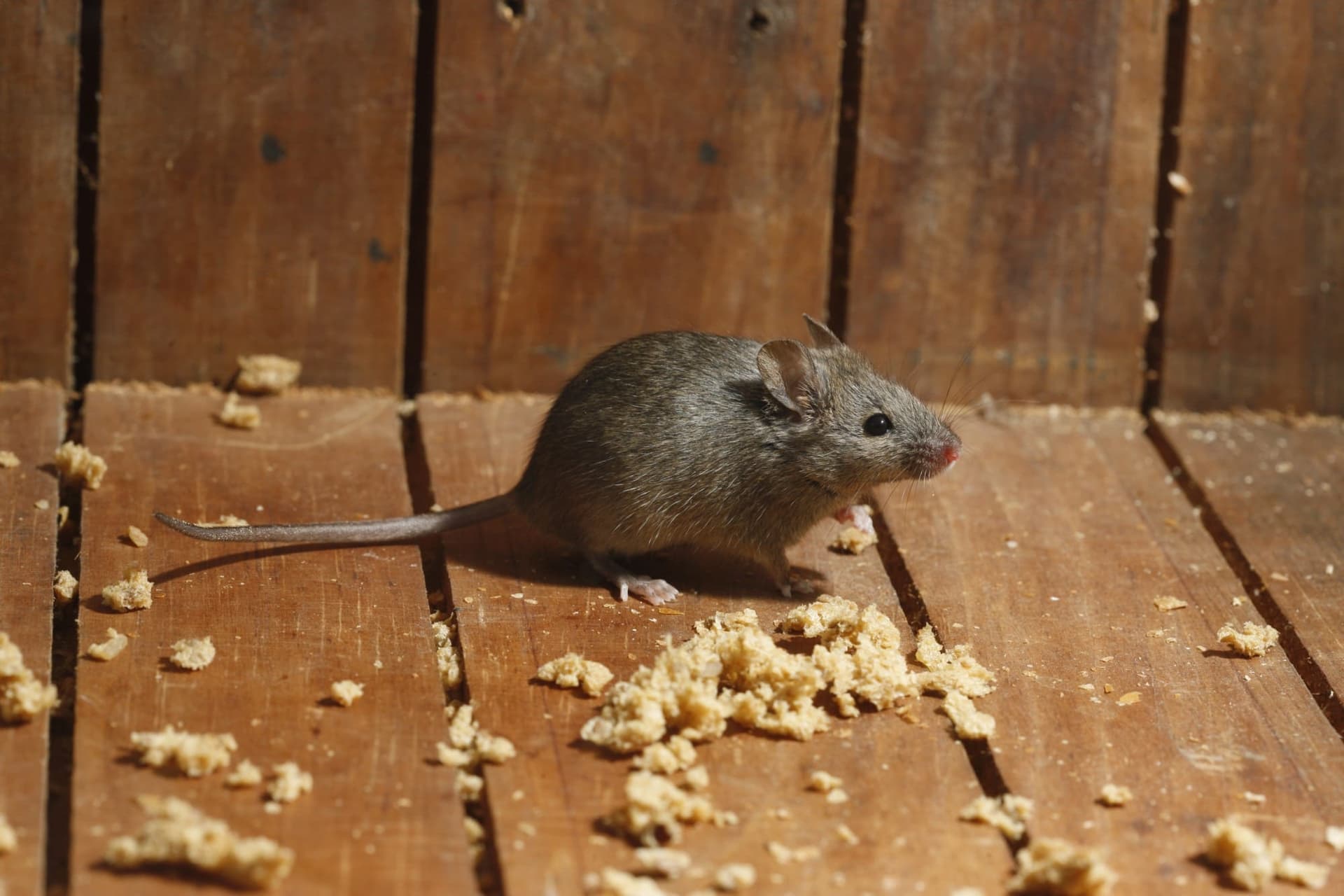
It usually starts with a sound. A soft scratching inside the wall after dark, or something skittering above the ceiling once the house goes quiet. A few days later there's a dropping in a kitchen drawer, and you start to wonder how a mouse got in at all.
If that sounds familiar, you're not alone. Fall is when a lot of Southern Maryland homeowners first notice mice, and there's a simple reason. As the nights get colder, mice that spent the summer outdoors go looking for a warm place with food and a sheltered spot to nest. Your house checks every box.
Below, we'll walk through why it happens, exactly where mice tend to get in, how to tell if they already have, and what you can do this weekend to keep them out.
Mice get into homes through small gaps near the ground: around pipes and cables, under doors, at foundation cracks and along worn garage door seals. A house mouse can squeeze under a gap just ¼ inch tall, so fall, before mice settle in for the winter, is the best time to find and close those gaps.— The short answer
Why do mice come inside in the fall?
It's not your imagination. Pest experts at the University of California and the University of Kentucky describe the same seasonal pattern: house mice that live outdoors often move into buildings in autumn as nighttime temperatures drop, and homeowners tend to notice them most through the winter.
Here in Southern Maryland, a lot of that outdoor mouse habitat sits right next to our homes. Many houses in Calvert, Charles and St. Mary's counties back onto woods, fields, farmland or the water. When the weather turns, the mice living in that cover look for the nearest warm shelter, and that's often a garage, crawl space or basement.
Timing matters, too. Mice breed throughout the year, so a pair that settles into a wall in October can turn into a much bigger problem by spring. Closing the gaps early is far easier than dealing with mice that have already moved in.
How small of a gap can a mouse fit through?
Smaller than most people think. According to the University of California's pest management guide, a house mouse can squeeze under a gap ¼ inch tall and through an opening 3/8 inch wide. The University of Kentucky puts it another way: mice can get through openings narrower than a dime.
That's why a house can look perfectly tight from the driveway and still have mice inside. The gaps that matter are usually small, close to the ground and hidden behind shrubs, leaf piles, the AC unit or whatever is stored along the garage wall.
Where do mice get into Southern Maryland homes?
Whether you live on a wooded lot in Owings, near the water in Chesapeake Beach or in a newer neighborhood in Waldorf, the same weak spots come up again and again. These are the places to check first:
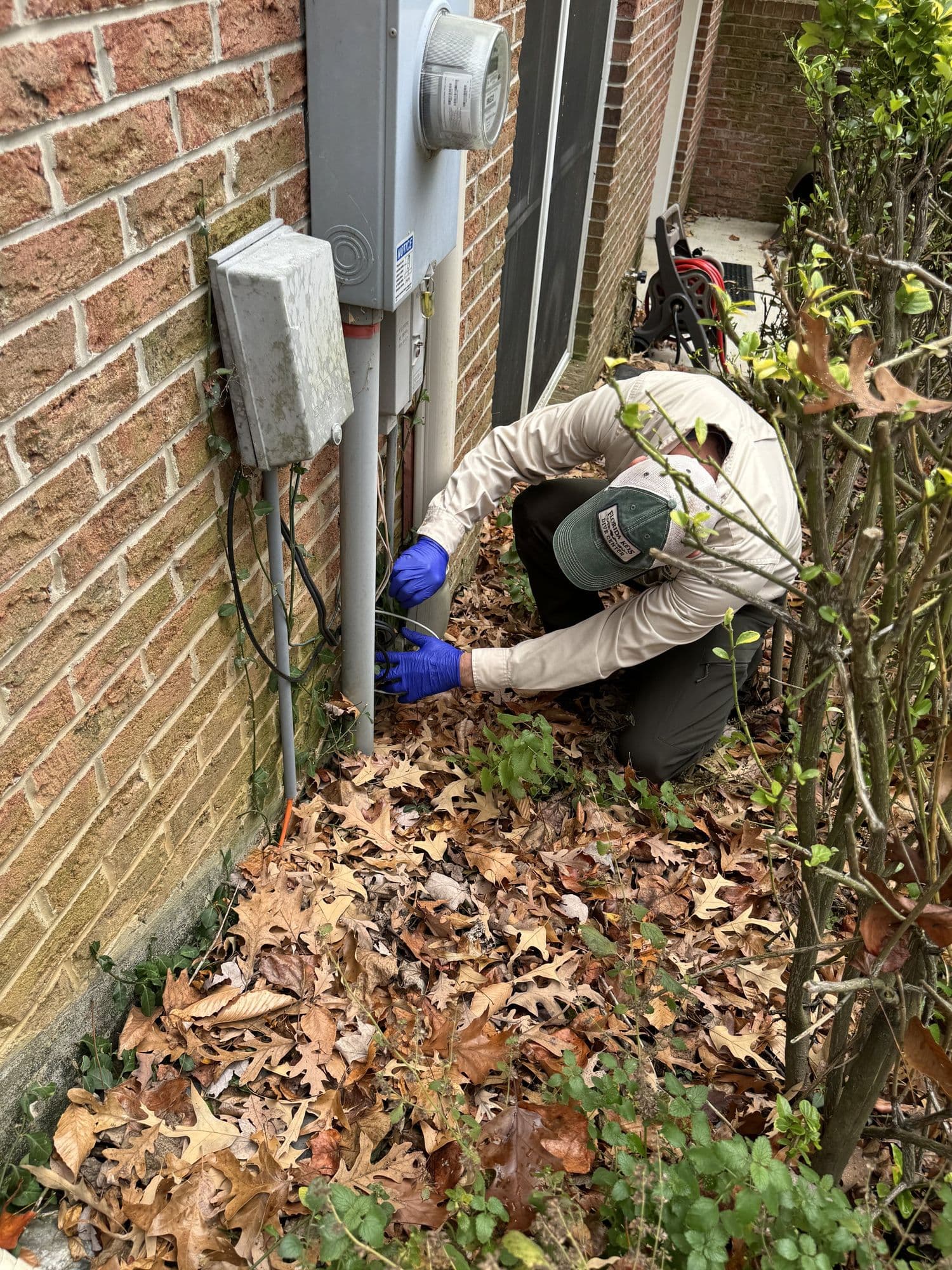
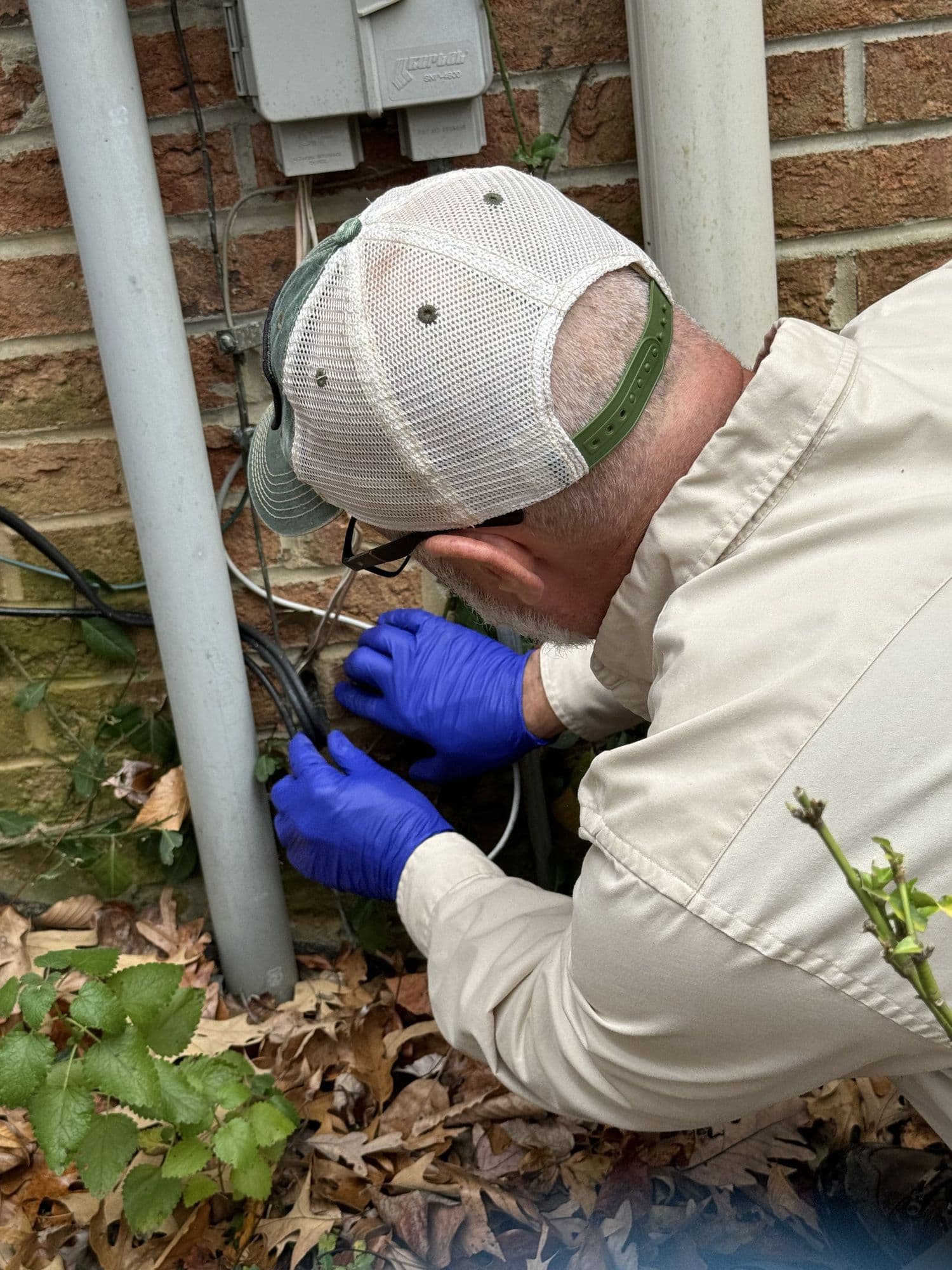
- Around pipes, wires and cables where they go through the wall, like air-conditioning lines, gas lines, outdoor faucets and cable or phone lines
- Under exterior doors, especially where the door sweep is worn or missing
- Along the bottom of the garage door, and at the corners where it meets the frame
- Cracks in the foundation, and gaps where brick or siding meets it
- Crawl space vents and access doors with damaged or missing screens
- Dryer vents and other wall vents with a broken flap or no cover
- Up high, along rooflines, soffits and attic vents
That last one surprises people. The same UC guide notes that house mice are excellent climbers and can run up any rough vertical surface, brick and many kinds of siding included. Shrubs, vines and tree limbs touching the house give them an easy route to openings well above the ground.
What attracts mice to your house?
Mice go where food and cover are easy to find. A clean house won't solve a mouse problem on its own, but as the UC guide points out, poor sanitation draws mice in and helps them thrive in bigger numbers. Outside, the usual culprits are:
- Firewood stacked right against the house
- Shrubs, ivy or tall grass growing up against the foundation
- Leaf piles and yard debris along the walls
- Bird seed, grass seed or pet food kept in bags in the garage or shed
- Trash cans without tight lids
- Boxes and clutter along garage walls that give mice somewhere to hide
How do you know if mice are already in your house?
Mice are mostly active at night, so you'll usually find what they leave behind before you ever see one. The most common signs of mice in the house are:
- Droppings in cabinets, drawers, along baseboards or in the garage. Mouse droppings are dark, pointed at both ends and about 1/8 to 1/2 inch long.
- Scratching or scurrying sounds in walls or ceilings, usually at night
- Chewed food packaging, or shredded paper and insulation pulled together as nesting
- Gnaw marks on wood, wiring or stored boxes
- A dog or cat that keeps staring at, sniffing or pawing at one spot on a wall or cabinet
Not sure what you're seeing? Our guide on how to tell if your house is infested with mice can help. And before you grab a broom, read our answer on whether to clean mouse droppings yourself.
A simple fall walk-around to help keep mice out
You don't need special tools for this. Pick a dry afternoon, grab a flashlight and walk slowly around the outside of the house, looking low:
- Check every spot where a pipe, wire or cable goes into the wall. Look for gaps around it, not just at it.
- Look at the bottom of each outside door. If you can see daylight underneath, a mouse may be able to get through.
- Close the garage door, then check the bottom seal and both corners from inside.
- Look at crawl space vents and dryer vents for torn screens or flaps that don't close.
- Scan the foundation for cracks, and check the line where siding or brick meets it.
- Pull firewood away from the house, trim shrubs and vines back from the walls, and rake leaves away from the foundation.
- Move bird seed, grass seed and pet food into sealed metal containers.
What keeps mice out, and what doesn't
Finding the gap is half the job. What you fill it with matters just as much, because mice gnaw. Here's what the University of California's guide recommends:
- Use metal or concrete to seal foundation cracks and openings around pipes, vents and utility cables.
- Steel wool works as a quick, temporary plug, but it can rust over time.
- Don't rely on expanding foam, rubber, vinyl, plastic screening or wood. Mice can chew through all of them.
Doors, windows and screens should close tightly. One word of caution: some openings, like dryer vents, crawl space vents and anything near a gas appliance, need airflow. Cover those with the right vent screen instead of blocking them, and if you're not sure, ask a professional before you seal anything.
What about store-bought poison? Be careful, especially with pets in the house. The National Pesticide Information Center warns that rodent baits can be attractive and dangerous to children, pets and wildlife, and recommends bait stations over loose bait. EPA rules also limit the rodenticides sold to homeowners to ready-to-use bait stations. If you have dogs or cats, read our answer on mouse poison around dogs and cats first.
When is it time to call a professional?
A few sealed gaps and a tidy garage go a long way. But it's time to bring in help when:
- You hear activity in the walls or ceiling, or keep finding fresh droppings
- You've trapped mice and more keep showing up
- You can't find where they're getting in
- The likely openings are up high, along the roofline or soffits
- You find chewed wiring or damaged insulation
At Planet Friendly Pest Control, we treat a mouse problem as a question about the house, not just the mice. Our inspection covers the outside and inside of your home, looking for entry points, nesting areas and where the mice are active. From there we put together a removal and exclusion plan, which may include trapping and removal, sealing entry points and follow-up monitoring.
You'll get a written inspection report after every visit, so you can see exactly what we found and what we did. Our approach is built for homes with pets: we begin with an inspection, address exterior conditions first, and use targeted treatments only where needed. All products are applied according to their labels, which helps limit unnecessary pesticide use and indoor exposure. Owner Gene Wright has solved local pest problems since 1998.
You can read more on our rodent control page, or browse the Rodent Control Hub for answers to the questions we hear most.
Common questions about mice in the fall
Q: Do mice only come inside when it's cold?
A: No. Mice can live indoors year-round, but fall is when many of the mice that lived outside all summer look for shelter, so it's when most people notice them. Here's what time of year mice are most active.
Q: Can a mouse really fit through a gap that small?
A: Yes. A house mouse can squeeze under a gap about ¼ inch tall and through an opening about 3/8 inch wide.
Q: Is expanding foam enough to keep mice out?
A: Not by itself, because mice chew through foam. Metal or concrete holds up. Steel wool is only a temporary fix.
Q: If I set traps, do I still need to seal the gaps?
A: Yes. Traps catch the mice already inside, but if the way in stays open, new mice keep coming. Here's why you keep seeing mice after setting traps.
Q: Can one mouse turn into a lot of mice?
A: It can. Mice breed throughout the year, so it's best to act on the first signs instead of waiting.
Q: Do you serve my area?
A: If you're in Southern Maryland or Northern Virginia, yes. That includes Calvert County, Charles County and St. Mary's County. See all of our Southern Maryland service areas.