
Stinging Insect Control
Is it safe to spray a wasp nest myself?
Answers about stinging insect control in Southern Maryland & Northern Virginia.
Usually not. Most store-bought sprays don’t eliminate the nest and often cause aggressive swarming toward the person spraying. This can lead to multiple stings and serious safety risks.
Trusted Local Experience
Gene Wright began professional pest work in 1998, and founded Planet Friendly Pest Control in 2010 to bring that experience to homeowners across Northern Virginia and Southern Maryland.
Why This Happens
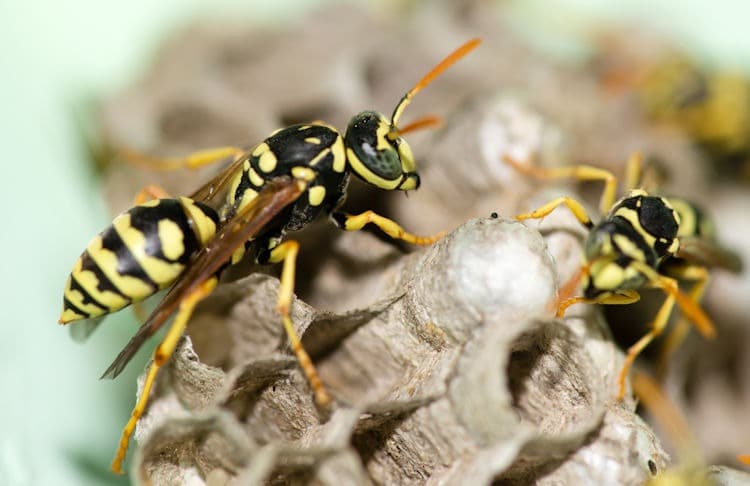
Wasps are defensive by nature. When a nest is sprayed, the colony doesn’t retreat—it reacts. The spray, noise, and movement signal danger, and the wasps respond together.
In Northern Virginia and Southern Maryland, nests are commonly built under roof eaves, decks, shutters, attic vents, and shrubs. These locations put homeowners very close before they realize what they’re dealing with.
As the season progresses, nests grow quickly. By summer, a single nest can hold dozens or even hundreds of wasps ready to defend it.
What This Means for Your Home
The biggest risk isn’t just one sting. It’s multiple stings happening fast. Swarming often occurs within seconds, especially if the nest is disturbed from a ladder or near a doorway.
Children and pets are at higher risk because they move unpredictably and don’t recognize warning signs. Even without allergies, multiple stings can be dangerous.
Another issue is false confidence. Many sprays kill a few visible wasps but leave the nest active. The activity returns, sometimes worse than before.
How Professionals Address It
Professionals don’t start with spraying. They start with a careful inspection.
The nest location, size, and wasp type are identified first. Different species behave differently, and guessing increases risk.
Control is handled from the exterior in a way that prevents swarming. The goal is full nest resolution, not agitation. Interior treatment is only used if activity has already moved inside.
Just as important, conditions that allowed nesting are addressed so the problem doesn’t repeat.
What Homeowners Can Do Now
Safe steps you can take without DIY treatment:
Avoid ladders, sprays, or knocking nests down. That’s when most injuries happen.
- Keep distance from visible nests
- Avoid trimming, mowing, or spraying near the area
- Keep doors and windows nearby closed
- Keep pets and children away
- Observe activity from a safe distance
When to Call a Professional
If wasp activity continues, the nest is near an entry point, or you’re unsure where the nest is located, it’s time to call a professional.
A proper inspection reduces sting risk and prevents repeat problems. Addressing it early is almost always safer and less costly than repeated DIY attempts.
Common Questions
Will spraying at night make it safer? Not always. Disturbed nests can still trigger aggressive behavior.
Is this common in our area? Yes. Warm summers and wooded neighborhoods make local homes ideal for nesting.
Is professional control safe for pets and kids? Yes. Exterior-first, inspection-driven control minimizes indoor exposure.
Written by Planet Friendly Pest Control, serving Northern Virginia and Southern Maryland since 1998. This guidance reflects decades of hands-on inspection experience using outside-first, minimal-product pest control methods focused on long-term prevention and home protection.
Ready to book your free inspection?
Hundreds of Google reviews across our verified service locations. Schedule a free, no-obligation inspection and we’ll start with the exterior — where most problems begin.