
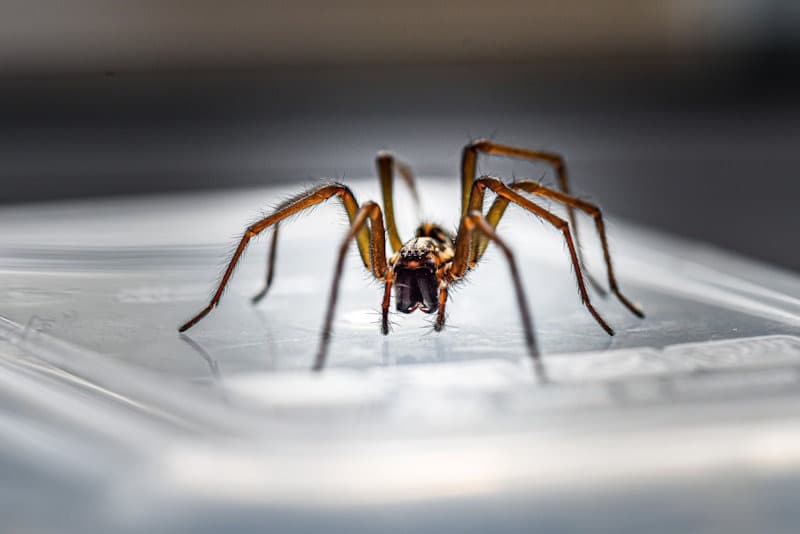
Spider Control
How long does a spider inspection take?
Answers about spider control in Southern Maryland & Northern Virginia.
Most spider inspections take less than an hour. Larger homes or complex layouts may take a bit longer. The goal is to be thorough without disrupting your day.
Trusted Local Experience
Gene Wright began professional pest work in 1998, and founded Planet Friendly Pest Control in 2010 to bring that experience to homeowners across Northern Virginia and Southern Maryland.
Why This Happens
Homeowners often worry that an inspection will be time-consuming or intrusive. In reality, a spider inspection is focused and efficient.
Spiders are tied to specific conditions—insect activity, entry points, moisture, and quiet harborage areas. An experienced inspector knows exactly where to look.
In Northern Virginia and Southern Maryland, common features like basements, garages, and exterior landscaping guide the inspection. That keeps the process streamlined and predictable.
What This Means for Your Home
For most single-family homes, an inspection is quick and low-impact.
You’re not committing to hours of walkthroughs or disruption. The inspector focuses on:
Larger homes, homes with extensive landscaping, or properties with crawlspaces may take a little longer—but it’s still typically under an hour.
- Exterior foundations and entry points
- Areas where spiders or webs are being seen
- Conditions supporting insect activity
What Thorough Pest Control Involves
Some companies rush inspections to move quickly to treatment.
Others overcomplicate the process to justify unnecessary services.
A proper spider inspection strikes the balance: thorough enough to be accurate, efficient enough to respect your time. Skipping inspection leads to guesswork. Overdoing it wastes time without improving results.
How Professionals Address It
A professional spider inspection follows a clear, practical flow:
Exterior review Foundations, doors, windows, vents, utility lines, and exterior lighting.
Spider activity zones Where webs or spiders are being seen—basements, garages, windows, corners.
Insect pressure check Identify which insects are supporting spider activity.
Entry point identification Gaps, cracks, and structural features spiders use to get inside.
Strategy discussion Explain what’s happening and what makes sense to fix it.
Most inspections are completed efficiently because the focus is on cause, not chasing every spider.
What Homeowners Can Do Now
You can help the inspection go smoothly by:
There’s no need to pre-treat or clean excessively. The inspection works best when conditions are seen as they are.
- Noting where spiders or webs appear most often
- Clearing access to basements, garages, and exterior doors
- Letting the inspector know how long the issue has been happening
- Mentioning seasonal changes you’ve noticed
- Asking questions—inspection time includes explanation
When to Call a Professional
Call for an inspection when spiders:
A short inspection early often prevents months—or years—of recurring frustration.
- Keep returning despite cleanup
- Rebuild webs in the same spots
- Appear season after season
- Start spreading beyond basements or garages
Common Questions
Do I need to be home the entire time? Usually yes, but the inspection itself is quick.
Will you inspect inside and outside? Yes. Spider issues are almost always outside-in.
Does a longer inspection mean a worse problem? No. Larger homes just take more time.
Written by Planet Friendly Pest Control, serving Northern Virginia and Southern Maryland since 1998. This guidance reflects decades of hands-on inspection experience using outside-first, minimal-product pest control methods focused on long-term prevention and home protection.
Ready to book your free inspection?
Hundreds of Google reviews across our verified service locations. Schedule a free, no-obligation inspection and we’ll start with the exterior — where most problems begin.