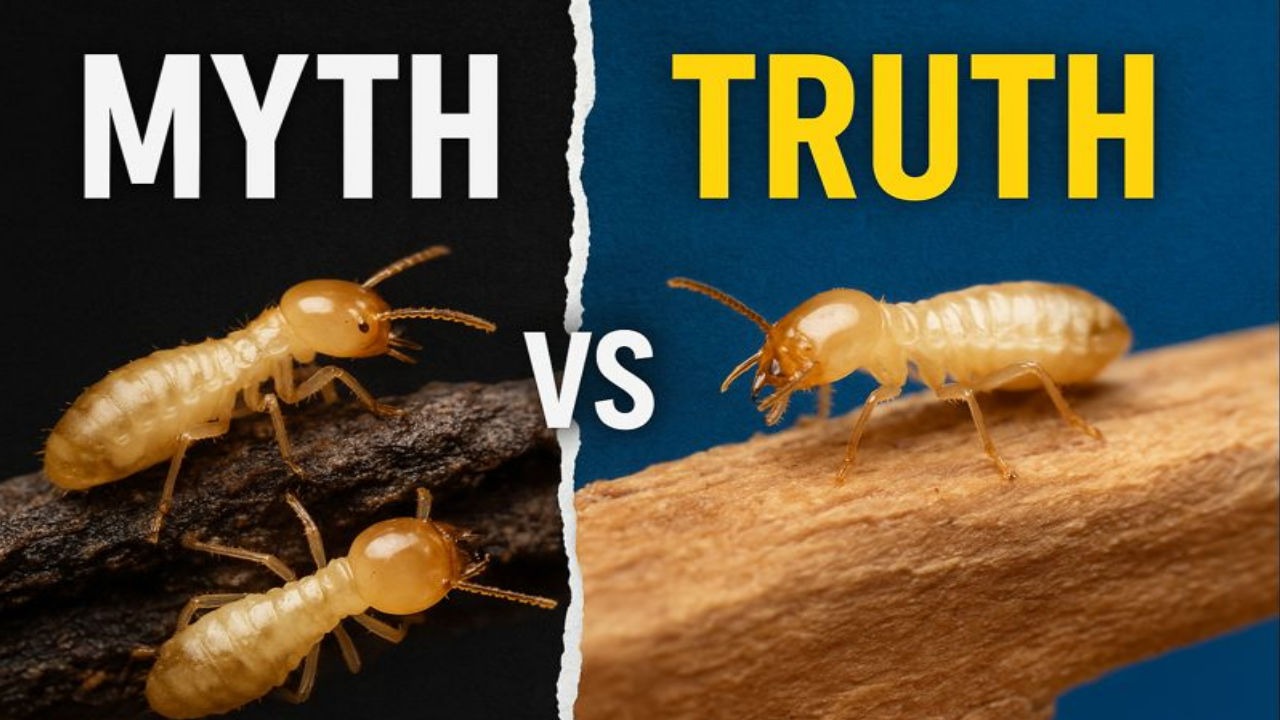
Most homeowners believe at least one termite myth, and that single misunderstanding often leads to serious and expensive damage. Termites cause billions of dollars in property damage every year, not because they are unstoppable, but because they are misunderstood. In Maryland and Northern Virginia, termite activity is extremely common due to moisture, soil conditions, and crawlspace construction. Many homes suffer silent damage for years before anyone realizes what is happening. By the time the truth becomes visible, repairs are often costly and disruptive.
Why Termite Myths Are So Dangerous for Local Homes
Termite myths delay inspections, hide warning signs, and create a false sense of security. Homeowners often rely on assumptions instead of facts, which allows termites to stay active longer. In regions like Southern Maryland and Northern Virginia, where humidity and rainfall are high, these myths are especially damaging. When misinformation guides decisions, termites are given time to destroy structural wood quietly. Education is often the missing piece between minor prevention and major repairs.
Myth #1: “If I Don’t See Termites, My Home Is Safe”
This is the most expensive termite myth homeowners believe. Subterranean termites do not roam in the open or crawl across floors. They live underground, inside foundation walls, crawlspaces, and hidden structural wood. That is why research and field inspections consistently show that about sixty-three percent of homes already have termite activity, even when homeowners see no signs. In Maryland and Virginia, hidden infestations are far more common than visible ones.
Myth #2: “I’ll Notice the Damage Before It Gets Serious”
Termite damage rarely shows itself early. Wood can look solid, clean, and undamaged on the outside while being hollow on the inside. By the time visible damage appears, termites have often been feeding for years. Floors may feel soft, trim may crumble, or doors may stop closing properly. At that stage, repairs are already expensive. Early detection depends on inspections, not eyesight.
Myth #3: “Termites Only Show Up Because of Wood”
The truth is that termites show up because of moisture, not just wood. Moisture softens wood and creates the environment termites need to survive. Common moisture sources include wet crawlspaces, poor drainage, negative grading, leaking downspouts, overflowing gutters, sump pumps discharging near foundations, and mulch piled against the home. In Maryland, where average annual rainfall exceeds forty inches, unmanaged moisture is one of the biggest termite risk factors.
Myth #4: “A Termite Treatment Solves the Problem Forever”
A termite treatment can stop active termites, but it does not change the environment that attracted them. If moisture conditions remain the same, termites are likely to return. This is why many homeowners experience repeat infestations and believe treatments failed. In reality, the treatment worked, but the underlying moisture problem was never corrected. Long-term termite prevention requires both treatment and environmental control.
Myth #5: “DIY Termite Control Works Just as Well”
DIY termite products focus on surface-level symptoms and do not reach termite colonies. Termite control is not about spraying visible areas. It requires understanding soil conditions, foundation types, moisture movement, and termite behavior. Store-bought solutions rarely address these factors, especially in crawlspace and slab-on-grade homes common throughout Northern Virginia and Southern Maryland. DIY attempts usually delay proper treatment and increase repair costs.
Myth #6: “Annual Termite Inspections Aren’t Necessary”
Because termites remain hidden, annual inspections are one of the most important tools for prevention. Homes change over time as soil settles, drainage shifts, and moisture problems develop. Older homes and homes with crawlspaces are especially vulnerable. Annual inspections catch early activity and moisture issues before damage becomes structural. Skipping inspections may save a little upfront but often costs much more later.
The Truth About Swarmers in Maryland and Virginia Homes
Swarmers are often misunderstood. Seeing swarmers does not mean termites just arrived, and ignoring them does not make the problem go away. Swarmers indicate an established colony nearby that has matured enough to reproduce. Their presence is a warning sign, not a minor nuisance. In many Maryland and Virginia homes, swarmers are the first visible clue of a long-standing hidden infestation.
PFPC’s Total Termite Solution for Long-Term Protection
Planet Friendly Pest Control does not sell fear or quick fixes. Our Total Termite Solution starts with moisture, education, and prevention. Every termite inspection includes a detailed moisture assessment, identification of hidden risk areas, and clear explanations so homeowners understand what is happening. When treatment is needed, we use proven methods designed for long-term protection, not temporary relief. Our mission is to protect homes using the least amount of product possible.
Why Moisture-First Termite Prevention Works
When moisture is controlled, termite pressure drops dramatically. Dry wood is harder to eat, and dry soil is less inviting to colonies. By correcting drainage, crawlspace humidity, and foundation moisture, homes become naturally resistant to termite activity. Treatments then become more effective and last longer. This approach reduces repeat infestations and protects the home year-round.
Schedule a Free Termite and Moisture Inspection Today
If you live in Maryland or Northern Virginia, termite protection starts with understanding the truth, not believing myths. Waiting for visible damage or assuming past treatments solved everything often leads to expensive surprises. A professional termite and moisture inspection provides clarity, education, and a real prevention plan.
? Schedule your Initial Site Evaluation today: 800-990-0335
? Book online: Book My Evaluation Now
Frequently Asked Questions About Termites
Do termites always leave visible signs in homes?
No. Most termite activity stays hidden inside walls, soil, and wood.
Is moisture really the main cause of termite problems?
Yes. Moisture creates the conditions termites need to survive and feed.
Do termite treatments last forever?
No. Treatments stop activity, but moisture must be corrected to prevent return.
Are annual termite inspections worth it?
Yes. Inspections catch problems early and reduce long-term repair costs.
Can homeowners handle termite control themselves?
Most DIY termite control fails because colonies and moisture are not addressed.
View our YouTube: 6 Termite Myths That Could Cost You Your Home Truth You Must Know
NEED HELP?
If you live in Southern Maryland, or Northern Virginia
FIND YOUR SOLUTION HERE
People, Pet & Pollinator Safe! Pest control for people who care.