
Stinging Insect Control
How can I tell if I have wasps or hornets?
Answers about stinging insect control in Southern Maryland & Northern Virginia.
You can usually tell by size and nest type. Hornets are larger and build enclosed, paper-like nests, while wasps are smaller and typically build open, umbrella-shaped nests.
Trusted Local Experience
Gene Wright began professional pest work in 1998, and founded Planet Friendly Pest Control in 2010 to bring that experience to homeowners across Northern Virginia and Southern Maryland.
Why This Happens
Wasps and hornets are closely related, which is why they’re often confused. Both are stinging insects that defend their nests aggressively when disturbed.
Hornets tend to be bulkier and louder in flight. Their nests are fully enclosed, often round or football-shaped, made from layered paper material.
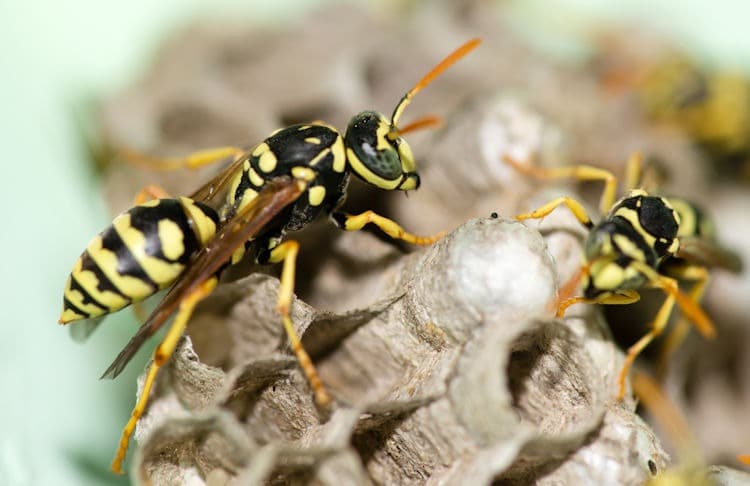
Wasps are slimmer and usually build open nests where individual cells are visible from below. These nests are commonly attached under eaves, decks, railings, or overhangs.
In Northern Virginia and Southern Maryland, both are common due to warm summers, wooded neighborhoods, and homes with plenty of sheltered nesting spots.
What This Means for Your Home
Correct identification matters because behavior and risk can differ.
Hornet nests often house larger colonies and can trigger intense defensive reactions if disturbed. Their enclosed nests can also grow larger before being noticed.
Wasp nests are often closer to walkways, doors, and patios. That increases the chance of accidental contact and surprise stings.
Misidentifying the insect can lead homeowners to take the wrong approach, increasing the risk of swarming and injury.
How Professionals Address It
Professionals don’t guess based on a quick glance. They inspect both the insect activity and the nest structure.
Species identification helps determine how defensive the colony may be and how removal should be handled. That reduces surprises and improves safety.
Control is handled from the exterior first, using methods that neutralize the colony before the nest is removed. Interior treatment is only used if insects have entered the home.
Prevention steps are then taken to reduce the chance of new nests forming in the same area.
What Homeowners Can Do Now
Safe steps you can take without close contact:
Avoid climbing ladders or trying to inspect nests up close.
- Observe insect size from a distance
- Look at nest shape without approaching
- Note where the nest is attached
- Keep doors and windows near the nest closed
- Keep children and pets away
When to Call a Professional
If you’re unsure whether you’re dealing with wasps or hornets, or if the nest is active and close to your home, a professional inspection is the safest option.
Correct identification early helps prevent stings, injuries, and repeat problems. It also ensures the nest is handled properly the first time.
Common Questions
Are hornets more dangerous than wasps? They can be, mainly due to larger colony size and stronger defensive behavior.
Can nest shape always identify the insect? Often, but not always. Some nests look similar without close inspection.
Is professional identification safe for families and pets? Yes. Exterior-first inspections minimize indoor exposure.
Written by Planet Friendly Pest Control, serving Northern Virginia and Southern Maryland since 1998. This guidance reflects decades of hands-on inspection experience using outside-first, minimal-product pest control methods focused on long-term prevention and home protection.
Ready to book your free inspection?
Hundreds of Google reviews across our verified service locations. Schedule a free, no-obligation inspection and we’ll start with the exterior — where most problems begin.