
Rodent Control Hub
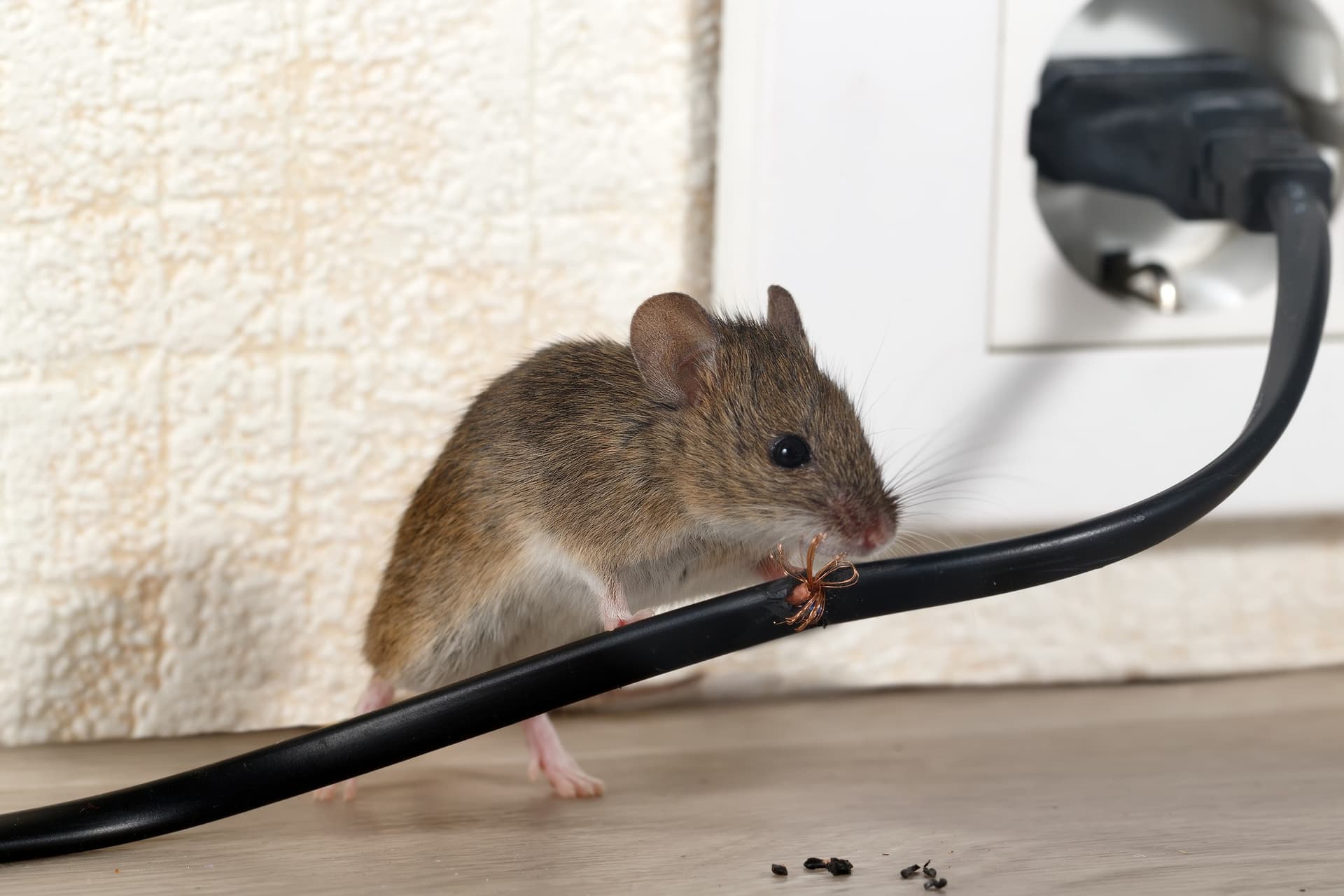
Can mice chew through wires and cause fires?
Answers about rodent control in Southern Maryland & Northern Virginia.
The Short Answer
Yes. Mice can and do chew through electrical wiring, and this damage can increase the risk of electrical shorts and house fires. It’s a known issue in active mouse infestations, especially in attics, basements, and wall voids.
Why This Happens
Mice chew constantly because their teeth never stop growing. Gnawing keeps their teeth worn down and manageable. Unfortunately, electrical wires feel just like other materials they chew, such as wood or plastic.
In Northern Virginia and Southern Maryland homes, wiring often runs through quiet, hidden spaces like attics, crawlspaces, garages, and behind basement walls. These areas also provide warmth and shelter, making them ideal nesting spots for mice.
Cold weather, new construction nearby, and seasonal changes often push mice indoors, where wiring becomes part of their environment.
What This Means for Your Home
Chewed wiring doesn’t always cause immediate problems. Many homeowners have no idea it’s happening until something stops working or a smell appears.
Over time, damaged insulation on wires can lead to sparking, overheating, or short circuits. This is where the fire risk comes in, especially when wiring is surrounded by insulation or stored items.
Beyond fire risk, chewed wires can lead to costly electrical repairs and unexpected outages. Pets and family members aren’t usually in direct danger from the mice themselves, but the hidden damage can create safety concerns.
How Professionals Address It
Professional rodent control always starts with a full inspection. The goal is to find where mice are getting in, where they’re nesting, and what conditions are allowing them to stay.
From there, control focuses on the exterior first—closing entry points, reducing access, and removing the reasons mice are attracted to the structure in the first place. Interior work is only done when necessary and always carefully planned.
The long-term solution isn’t just removing mice. It’s preventing new ones from getting inside and creating conditions where they can’t survive or cause damage.
What Homeowners Can Do Now
Avoid trying to handle rodents or wiring issues yourself. Electrical damage should always be taken seriously.
- Listen for scratching or movement in walls or ceilings
- Reduce clutter in attics, garages, and storage areas
- Keep food sealed and crumbs cleaned up
- Check for gaps around doors, pipes, and utility lines
- Monitor breakers, outlets, or lights for unusual behavior
When to Call a Professional
If mice activity continues, or if you suspect wiring damage, it’s time for a professional inspection. Rodent issues rarely solve themselves, and the longer they go unnoticed, the more damage they can cause.
A proper inspection helps catch problems early, reduce long-term costs, and protect the safety of your home. Prevention is almost always less expensive than electrical repairs or fire damage.
Common Questions
Will mice always chew wires? Not always, but it’s common enough to be a real concern in active infestations.
Is this common in our area? Yes. We see wire damage regularly in Northern Virginia and Southern Maryland homes.
Can this cause a fire right away? Usually it’s a gradual risk, but any damaged wiring should be taken seriously.
Keep reading
More Rodent Control Hub questions
Ready to book your free inspection?
Hundreds of Google reviews across our verified service locations. Schedule a free, no-obligation inspection and we’ll start with the exterior — where most problems begin.